The most effective garden lighting combines a clear route, comfortable light where you sit and a few carefully chosen features. Start with how you use the space after dark, then add atmosphere. A layered scheme can make a small patio or a larger garden more useful without flooding every boundary with light.
Light the routes you actually use
Begin at the back door and follow the route to the gate, bins, shed or seating area. Shielded path lights show changes in direction, while recessed step lights reveal level changes. Position fittings so people see the ground rather than look into a bright lamp.
Check the view in both directions. A fitting discreet from the house may glare on the return journey. Sketch door swings, planting and furniture before fixing positions. Avoid placing delicate lights where a mower, wheelbarrow or growing shrub will repeatedly strike them.
Make patios and dining areas comfortable
For outdoor eating, aim for enough light to see faces, food and the route indoors. Wall lights with controlled downward output often feel calmer than a powerful floodlight. Outdoor-rated festoon lights can soften a pergola, provided their supports and electrical supply suit the product.
Separate decorative lighting from security lighting. A motion sensor repeatedly switching a bright lamp over the dining table is distracting. Independent controls let you keep the seating area comfortable while an access light responds to movement elsewhere. Decide where switches should go before paving is finished.
Are you considering garden lighting installation?
Bury Electrical Specialists provides garden lighting installation and other electrical services throughout the following areas:
Practical checklist
- Prioritise routes and changes of level.
- Control seating and security lighting separately.
- Leave wildlife corridors dark.
Choose a few planting features
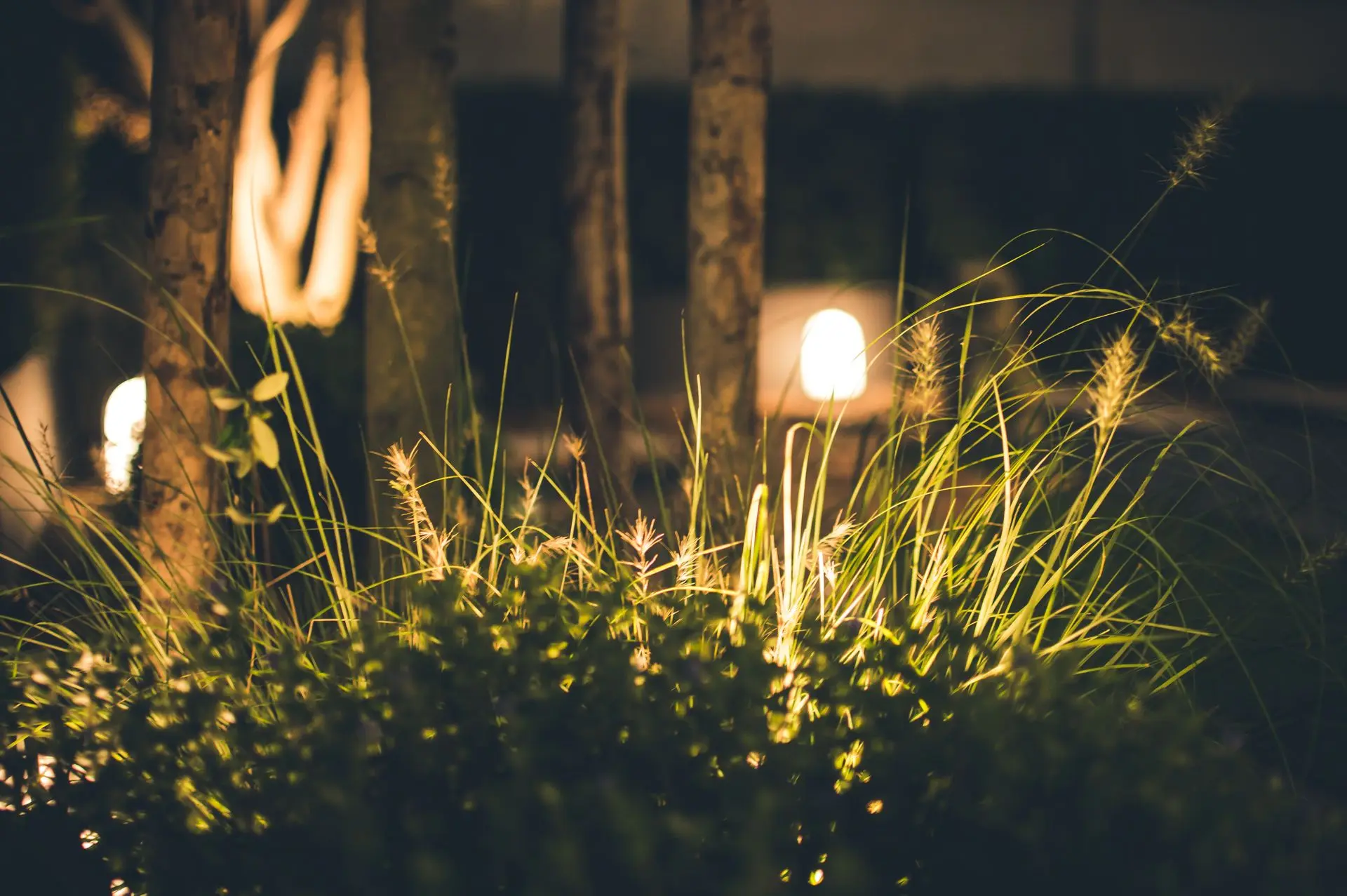
A textured wall, specimen shrub or attractive planter becomes a focal point when the rest of the garden remains darker. Experiment with beam direction: light across a surface reveals texture, whereas a frontal beam can make it appear flat. Avoid lighting every plant equally.
Leave hedges, ponds and known wildlife routes dark where possible. The Bat Conservation Trust points designers to its current artificial-lighting guidance. Colour temperature alone cannot make a scheme harmless to wildlife: shielding, low output, short operating periods and location all matter.
Use LEDs and calculate the running cost
Energy Saving Trust’s lighting advice, updated in October 2026, states that LEDs use 80% less electricity than comparable halogen lighting. Your actual bill depends on fitting numbers and operating hours. Energy Saving Trust lighting advice.
For a worked example, six 4 W lights total 24 W. Used four hours each evening, they consume 0.096 kWh daily, or approximately 35 kWh annually. Multiply by your own unit rate. At an illustrative 30p/kWh, electricity costs about £10.51 a year, excluding controls and other loads.
Pick controls that match each zone
A timer turns decorative lighting off after you go indoors, while a daylight sensor prevents operation in bright conditions. Movement detection suits occasional access to a side gate. Check coverage so passing traffic or a neighbour’s movements do not trigger it unnecessarily.
Smart controls help when everyday operation stays simple. Consider what happens if the internet fails and whether everyone can use the lights. Wider electrical services can be coordinated before landscaping closes access to cable routes. Include an accessible means of controlling each planned zone.
Plan the supply before buying fittings
Solar lights can be useful decorative additions, but output depends on location, weather and battery condition. For reliable fixed lighting, ask an electrician to plan suitable equipment and protection. An outdoor label does not mean a product suits every exposed location.
Long extension leads make a poor permanent garden layout. If existing lights cut out in rain, arrange electrical fault finding before adding more. Resolve the original defect first, then build the design around a dependable installation that can be maintained without dismantling your planting.
Sources and further reading
Guidance checked on 4 November 2026. Figures retain the dates and scope of their original sources.
Summary
Start with practical routes, add a comfortable seating zone and select a small number of features to highlight. For an outdoor scheme in Stowmarket, Bury Electrical Specialists can help translate those ideas into suitable fittings, cable routes and controls.