
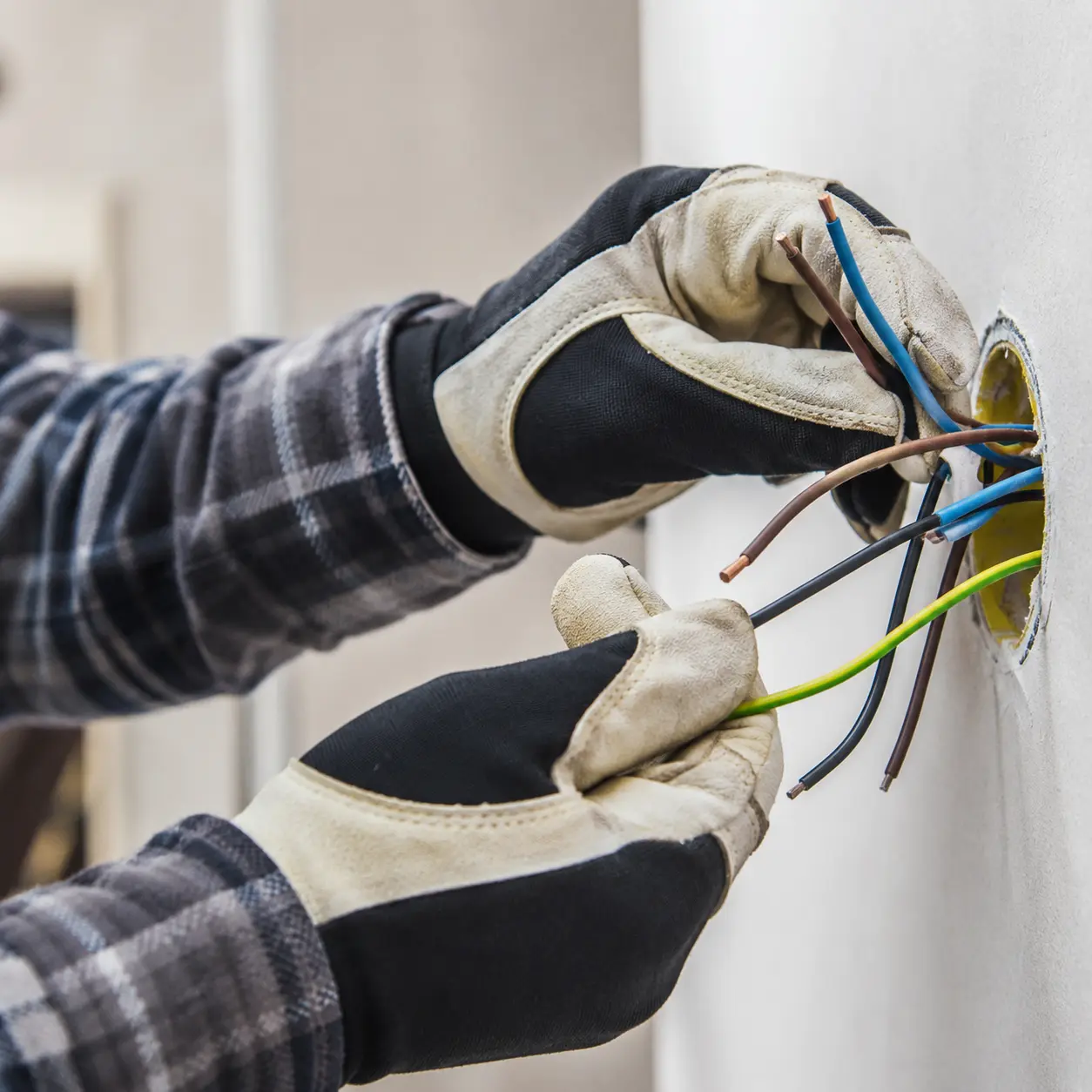
Repeated electrical faults, heat-damaged accessories and deteriorating cables can indicate a need for partial or full rewiring. However, no single symptom proves that every cable needs replacing. A condition assessment should identify affected circuits and distinguish a repairable local defect from deterioration across the installation.
Heat, smells and abnormal sounds
A socket that crackles, a switch that smells burnt or a discoloured faceplate needs prompt investigation. These signs can arise from a poor connection or damaged accessory as well as a wiring defect. Stop using the affected point and do not remove its faceplate.
An electric shock from a fitting also needs attention. If there is smoke or fire, leave and call 999. An electrician can determine whether the problem is local, whether the circuit must remain isolated and what work is needed before it is used again.
Check the installation’s history
Old rubber, fabric-covered or lead-sheathed wiring deserves assessment, especially where insulation has become brittle. Do not bend or disturb old cables to inspect them. A modern-looking socket front does not tell you what cable or joints are behind it.
Look for inspection reports, certificates and records of extensions. Wiring colour alone is not proof of danger, and a recently decorated home may retain older circuits. Electrical Safety First states that there is no fixed age at which every property must be rewired.
Are you considering electrical rewiring?
Bury Electrical Specialists provides electrical rewiring and other electrical services throughout the following areas:
Practical checklist
- Record symptoms and past electrical work.
- Ask which circuits actually need replacement.
- Plan electrical work before redecorating.
Trips and flickering need context
Persistent flickering across rooms may indicate a connection or supply issue; one flickering lamp may have a simpler cause. Record whether the problem affects a fitting, circuit or the whole property. Mention recent leaks, building work and new appliances.
Frequent trips should lead to electrical fault finding before a rewire is prescribed. A damaged appliance or outdoor connection can cause a widespread interruption. Identifying the source prevents a repairable fault being mistaken for evidence that the house needs complete replacement wiring.
Past alterations can hide weaknesses
Extensions, converted lofts and kitchen refits can leave a mixture of installation methods and wiring ages. Missing records do not automatically mean defective work, but increase the value of inspection. Explain any known improvised additions or repeated repairs to the electrician.
The IET’s April 2026 research reported that 6% of respondents had attempted rewiring. This measures DIY behaviour, not the proportion of unsafe homes. Appearance and a previous owner’s reassurance cannot replace inspection when the installation’s history is unclear. IET household electrical safety research, April 2026.
A fuse board is a separate question
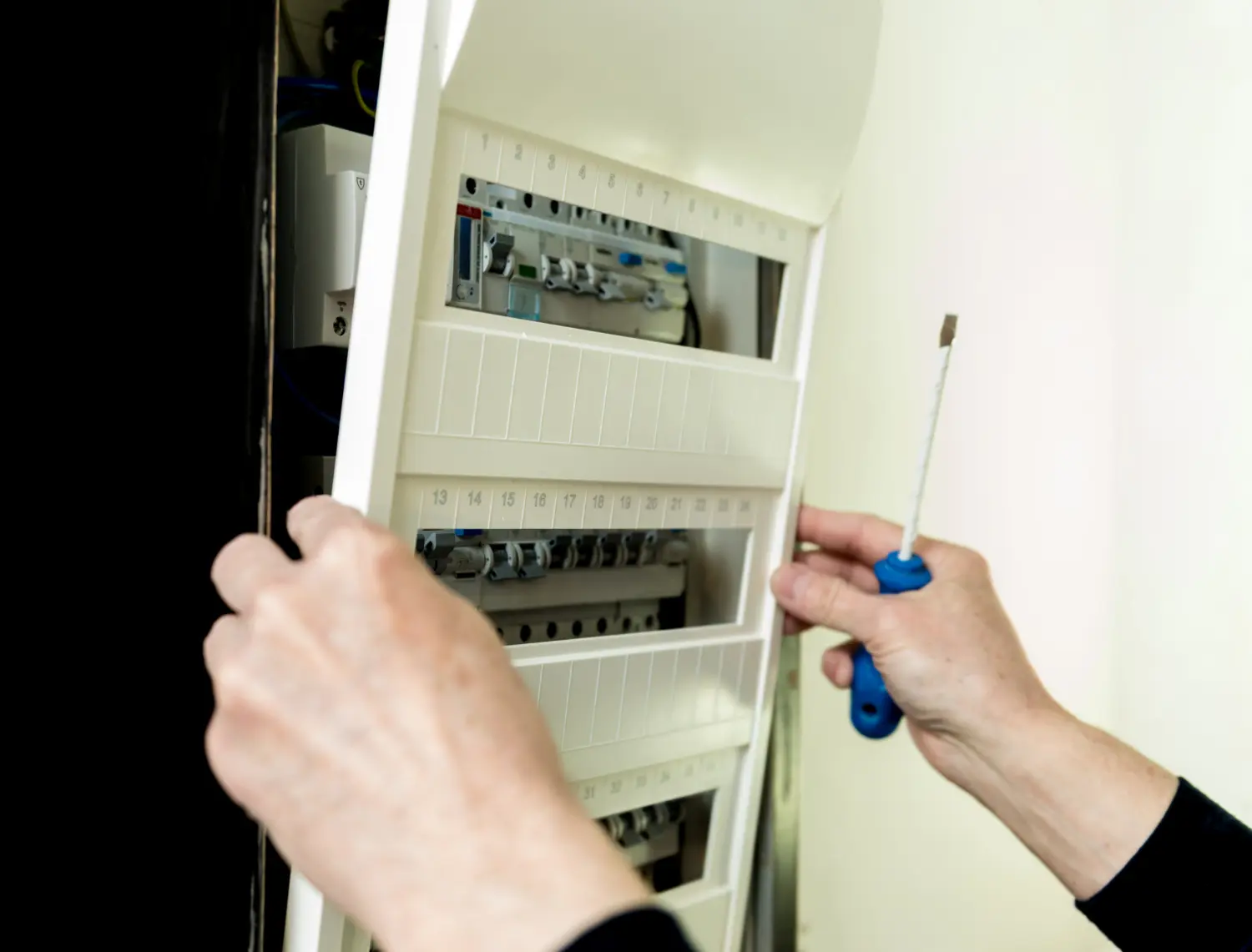
A consumer unit and the circuits it protects can age differently. Some homes need fuse board replacement while their circuit wiring remains serviceable; others have a newer board connected to deteriorated cables. Neither arrangement can be judged reliably from a photograph.
An Electrical Installation Condition Report records observed defects, test results and limitations. Ask which findings require urgent action, further investigation or improvements. A general statement that the electrics are old is not equivalent to a circuit-by-circuit explanation of the required work.
Choose the scope from evidence
A partial rewire may suit deterioration confined to a circuit or area. Widespread insulation problems, unsafe alterations or major renovation may support a full rewire. The decision must account for how safely retained and renewed sections can work together.
For a home in Newmarket, gather reports before redecorating or fitting a kitchen. Agree socket positions, lighting needs and access arrangements after the safety findings are clear. This helps avoid spending on finishes that then need opening for essential electrical work.
Sources and further reading
Guidance checked on 4 November 2026. Figures retain the dates and scope of their original sources.
Summary
Recurring faults and damaged wiring justify inspection, but the extent of replacement should follow the evidence. Bury Electrical Specialists can discuss rewiring in Newmarket and help you understand the practical scope of any recommended work.