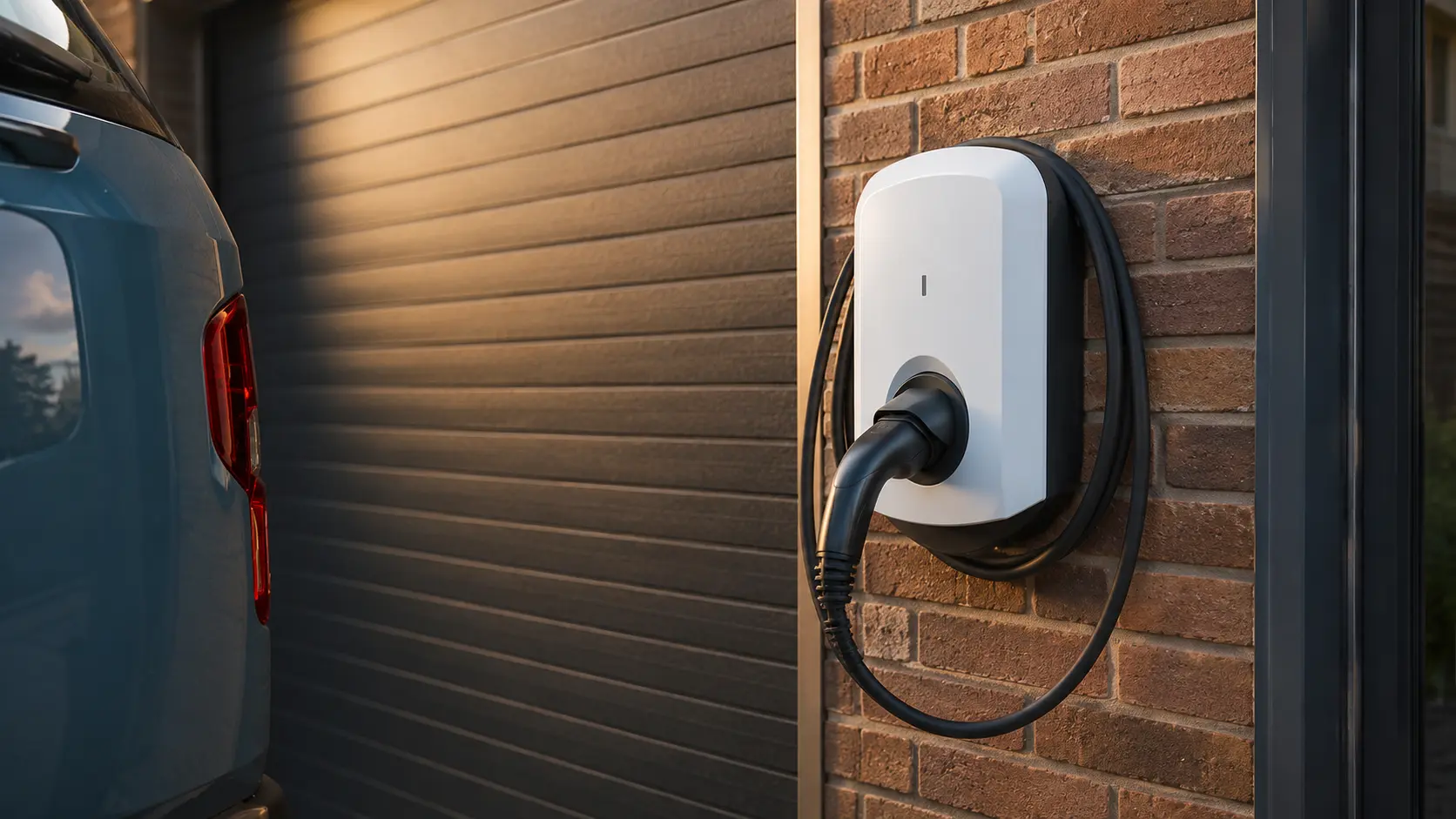

Charging without a driveway may be possible if you can run a cable through an approved pavement channel to a legally parked car. For households near Bury St Edmunds, the first conversation is with Suffolk County Council about the street and pavement. The second is with an installer about the charger and cable route on your property.
What a pavement charging channel does
A channel is a narrow, covered slot set into the footway from the property side towards the kerb. During charging it holds the cable so the walking surface stays clear. A contractor authorised for the highway work installs it. The electrician handles the charger and the electrical installation on the property side. Ask each party where their responsibility starts and ends, especially if different contractors quote for the two jobs.
The temporary lead still comes out when charging finishes. Check the council's conditions on how the channel is used and maintained. A cable cover or rubber mat bought online is a different arrangement and offers no substitute for highway permission.
See whether you can reliably park at the kerb
Watch where you can park on ordinary weekday evenings and weekends. The best location is one where you can legally use the space alongside the channel often enough to charge. A junction, dropped kerb, marked restriction or cycle lane can make a short-looking route impractical. The channel gives you no exclusive parking rights. A neighbour can still use the space when it is free.
Suffolk's criteria include a raised kerb and a charger rated at 7.5 kW or less. Street furniture, nearby channels and a public chargepoint within 400 metres or about five minutes on foot can affect the application. Check the council's criteria and its public chargepoint map before paying for an assessment.
For a realistic trial, note where the car is parked every evening for a week. If you can only use the right spot once, check whether that single session would supply your usual weekly driving. Make room in the plan for occasional public charging.
Looking for EV charger installation near you?
Bury Electrical Specialists provides EV charger installation in the following areas.
Get the permissions in the right order
Use Suffolk County Council's application page to see what it needs to assess the address. Have an address plan and photos showing the building line, pavement and kerb. If you rent or the wall belongs to a freeholder, confirm who can authorise the mount and the route that reaches it.
The Department for Transport changed planning rules for qualifying solutions in England in October 2026. Highway permission is a separate matter. Ask the council about the particular address where listed status, a private forecourt or other restrictions could affect the proposal.
Compare the channel cost and charger quote
In November 2026 Suffolk County Council listed a £210 assessment fee, a £50 annual fee and a £50 roadspace booking charge that the highway contractor handles. Channel installation and the electrical work are additional. The council says the assessment fee is non-refundable if an application is refused. Confirm those fees before applying and request separate prices for the channel and the property-side installation.
Eligible households can check the national on-street chargepoint grant, which the government lists at up to £500. Confirm the rules, deadline and evidence before booking. A grant is one line in the budget. Include parking availability, maintenance and what happens to the channel if you move.
Plan the handover between contractors
Give the electrician the approved channel position and the dimensions from the wall to the parking spot. Ask how far the manufacturer's lead reaches with the car parked both ways, allowing for the charging port position. Agree the charger position before either contractor cuts or drills anything. When the work is ready, ask them to demonstrate opening the channel, connecting the vehicle, closing the cover and storing the cable after charging.
Summary
Start with the location you can legally park in, follow the council's approval process and bring the proposed channel position to your charger survey. That gives the installer enough information to quote for the power supply and lead reach.